Reflections

My favorite project this semester was the audio project. I really enjoyed every aspect of it. I enjoyed being interviewed, I enjoyed answering questions about my background in music, and I absolutely love doing audio engineering, it’s been a hobby of mine since the mid-2000’s.


The skill that I think I will use most in the future is the audio project. I have been recording music for almost two decades and, although it is not necessarily a new skill, it will definitely be something that I use in the future.


I am aspiring to go to law school after I graduate WSU so I plan on being a lawyer. I could potentially use the video production skills I learned in this class if I have evidence I want to present to the judge on film. I could also use the audio skills that we went over in this class to clean up audio in case I need to use an audio clip that was collected as evidence, but it is inaudible or barley audible. Knowing how to adjust the skills and cut tracks down to exactly what is needed is a useful skill.


This class provided an array of useful skills. In the future, projects involving augmented reality (AR) may be useful as that is a current trend in technology. I would really like to know what programs AR projects are created in, how the other skills, like logo design, could be incorporated into an AR project, and if you could have a section that you created a project that encompassed all of the pieces into an AR experience. A project like that would really help get people ready for what is coming out now and what we could do in the future. I feel like this is a more important skill that logo design in the context of a communication class in this day and age.


The tutorials were fairly straight forward, although it would have been nice if they had used the same version of the software that we were using. This caused a bit of frustration and that could have been easily circumvented by diligence by the instructor.
 

Video Final Draft

Idea & Inspiration

To continue my overall theme for this semester I chose to elaborate further on my band days. Amy was kind enough to set the stage for an interview and I supplemented this video with footage of me playing the drums as well as the guitar.

Design influences began with YouTube videos of some of my favorite musicians talking about their experiences throughout their career. I always found these videos to be uplifting and motivating. I wanted to create some sort of biography that I could look back on in the years to come. Also, if my music were to ever inspire any other artist, I want to give back to the music community that gave me so much, especially at a young age. The experiences that I had during those times shaped who I am today and I want to share those with anyone who has the same passion for music that I do.

One factor that held precedence was that I wanted to include my love of music in the video. By showing my passion through playing I felt that I could inspire others to feel love for music as much as I do.

Design Process/Technical Detail

The design was pretty simple with this video. I began by recording clips of myself playing the guitar as well as the drums. The actual audio of the video came in later as I attempted to match the visuals with stories from my band days.

For technical detail I kept it pretty simple. I used the dip to white video transition after the initial setting of Amy and I in the beginning. I then pieced together the video clips that were taken in an attempt to match what I was saying in the audio. My hope is to add some original music in the background. That will come in the final draft of this project.

The last piece was to add the ending credit with the title button as well as a dip to black after the last clip.

I would like to take this project even further by adding in photos of myself back in the day so that the audience can get a feel for what I did.

I used my iPhone 7 for the recordings as well as my Microsoft Surface.

Video Story Draft

Idea & Inspiration

To continue my overall theme for this semester I chose to elaborate further on my band days. Amy was kind enough to set the stage for an interview and I supplemented this video with footage of me playing the drums as well as the guitar.

Design influences began with YouTube videos of some of my favorite musicians talking about their experiences throughout their career. I always found these videos to be uplifting and motivating. I wanted to create some sort of biography that I could look back on in the years to come. Also, if my music were to ever inspire any other artist, I want to give back to the music community that gave me so much, especially at a young age. The experiences that I had during those times shaped who I am today and I want to share those with anyone who has the same passion for music that I do.

One factor that held precedence was that I wanted to include my love of music in the video. By showing my passion through playing I felt that I could inspire others to feel love for music as much as I do.

Design Process/Technical Detail

The design was pretty simple with this video. I began by recording clips of myself playing the guitar as well as the drums. The actual audio of the video came in later as I attempted to match the visuals with stories from my band days.

For technical detail I kept it pretty simple. I used the dip to white video transition after the initial setting of Amy and I in the beginning. I then pieced together the video clips that were taken in an attempt to match what I was saying in the audio. My hope is to add some original music in the background. That will come in the final draft of this project.

The last piece was to add the ending credit with the title button as well as a dip to black after the last clip.

I would like to take this project even further by adding in photos of myself back in the day so that the audience can get a feel for what I did.

I used my iPhone 7 for the recordings as well as my Microsoft Surface.

Raw Video Footage & Storyboard

Storyboard: Raw Video

Visual Elements Audio Elements
0:00-0:15 Start of video Interviewer asks question about how early band career.
0:16-0:45 Cut to a shot of me playing guitar Guitar track in the background. Questions being answered in the foreground of the audio track.
0:46-0:59  Cut to a shot of the interviewer asking question Interviewer asks question about how early band songs.
1:00-1:35  Cut to a shot of me playing guitar Guitar track in the background. Questions being answered in the foreground of the audio track.


Audio Story – Final

For this project, I created an interview about my first band. Amy was kind enough to play the role of the interviewer and asked some great questions, which were very fun to answer. This idea relates to my course topic as the theme of the course topic is music, specifically my music career.

Design influences for me were all the great interviewers that cover music, particularly bands in the niche genres that I listen to, as well as podcasts like Metal Talks on Spotify. I listened to other interviews in a similar space to this as well as read articles of the same nature to understand the elements that they used to answer similar questions. The main difference between the final and the draft is there are recordings of songs from my first band playing in the background, all applicable to the time period in which I’m talking about.

The design process started with doing an initial self-interview. I asked for some feedback and when talking through the idea, it became obvious that it was less coherent than I wanted. I wanted to tell a story that had a narrative arc, which is difficult to do in less than two minutes.

I created the audio tracks using my iPhone 7 and the voice memo app. The process for constructing the recording in Adobe Audition was to place the interview questions, place the answers, they chop them up to fit within the time frame. I mainly used the razor tool in order to edit the track.

I had no issues with the program itself, I’ve been doing audio engineering for 15 years, this is a relatively basic version of the programs that I typically use. I tend to prefer more expansive toolsets, like those found in Pro Tools, but for doing a basic edit job with single tracks, not having to work with racking or layering, it worked well.

The interviewer in this recording is Amy Johnson, who approved of me using her voice in the interview. The rest of the interview are answers provided by me. I also played the tracks in the background which are acoustic versions of tracks from my first band.

Audio Story – Draft

For this project, I created an interview about my first band. Amy was kind enough to play the role of the interviewer and asked some great questions, which were very fun to answer. This idea relates to my course topic as the theme of the course topic is music, specifically my music career.

Design influences for me were all the great interviewers’ companies that cover music, particularly bands in the niche genres that I listen to, as well as podcasts like Metal Talks on Spotify. I listened to other interviews in a similar space to this as well as read articles of the same nature to understand the elements that they used to answer similar questions.

The design process started with doing an initial self-interview. I asked for some feedback and when talking through the idea, it became obvious that it was less coherent than I wanted. I wanted to tell a story that had a narrative arc, which is difficult to do in less than two minutes.

a story that. I created the audio tracks using my iPhone 7 and the voice memo app. The process for constructing the recording in Adobe Audition was to place the interview questions, place the answers, they chop them up to fit within the time frame. I mainly used the razor tool in order to edit the track.

I had no issues with the program itself, I’ve been doing audio engineering for 15 years, this is a relatively basic version of the programs that I typically use. I tend to prefer more expansive toolsets, like those found in Pro Tools, but for doing a basic edit job with single tracks, not having to work with racking or layering, it worked well.

The interviewer in this recording is Amy Johnson, who approved of me using her voice in the interview. The rest of the interview are answers provided by me.

Final Logo Design

Ideas and Inspiration:

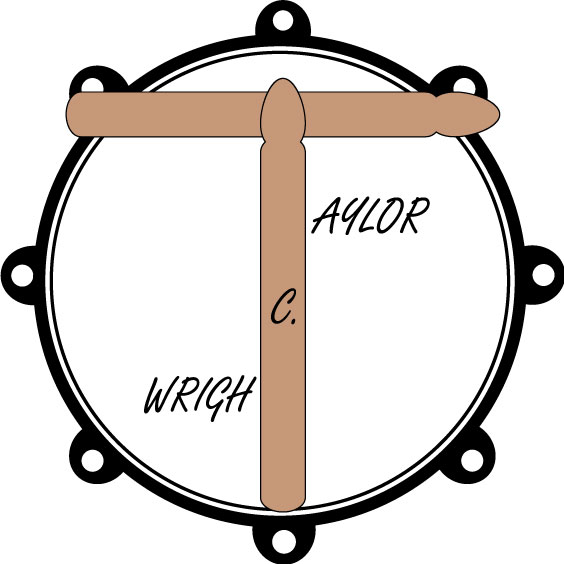
For this project, I decided to make a logo for a band/artist (myself being the artist in question). I chose this because my course topic revolves around the idea of creating an extended play album and all the parts involved to take it to press. This design would be the logo that you could exchange for just stating the artist name in the design.


Design Process:

In this design, I was mainly concerned with balance. The central part of the design is the large letter in the middle and everything expands out from that part of the design, so balance was key. As for research, I looked at drum heads and drum sticks to inform the design of the aforementioned elements. Often, drummers will use their logo as a drum head for their bass drum, since I decided to use sticks, I decided to show them resting on the rim of a drum. The significance of the design is that I started in music as a drummer and it is the instrument I am most proud of being able to play.


The design process started with me sketching out a few renditions of the design. I knew I wanted to use a drum sticks and my name, so I started with the drum sticks. I sketched them out to make the “T” and from there decided to balance out the image by putting the rest of the letters of my name on either side of the letters under the umbrella of the “T.” I originally had planned on putting my middle initial as a large letter behind the drum sticks in the center of the two pairs of letter to get rid of empty space but the balance was much better once adding it on top of the drum stick. I then decided to create a drum head for the sticks to be resting on to round out the logo.


Technical Design:

The elements I used in my design were two drum sticks, a drum head, and text. I modeled the drum sticks from drum sticks that I had next to my desk and played with the design by placing them on top of my snare drum in different ways to see how the design looked before doing the sketch. The process I used went as follows:

  1. Create the drum stick starting with the rectangle tool.
  2. Use the scissors to remove the bottom line of the rectangle.
  3. Use the ellipse tool to create the bottom of the stick.
  4. Use the scissors to remove the top part of the ellipse to complete the bottom of the stick.
  5. Use the direct selection tool to round the top of the rectangle.
  6. Use the ellipse tool to create an ellipse for the tip of the drum stick.
  7. Use the direct selection tool to manipulate the ellipse into an egg shape.
  8. 8.      Use the scissors to remove the bottom part of the ellipse to complete the tip of the stick
  9. Place the drum stick head on the top of the drum stick.
  10. Group the objects and duplicate.
  11. Rotate and center the duplicated object.
  12. Create the text, change the font, alter the size and center the entire image.
  13. Use the ellipse tool to create a large circle for the dampener of the drum.
  14. Use the ellipse tool to create a large circle for the rim of the drum.
  15. Adjust the stroke to add weight to the rim.
  16. Use the ellipse tool to create a small circle for the tension rod holders with that is fully filled in using black.
  17. Use the ellipse tool to create a smaller circle for the hold the tension rods occupy fully filled in white with a small stroke.
  18. Place the smaller circle slightly just above center in the larger circle to create the tension rod holder with an empty center and group the objects.
  19. Create seven copies and place them around the drum head in even intervals and move them to the back of the image.
  20. Move the drum head to the back.
  21. Expand all items in the image.


The design went swimmingly, I did not run into any noteworthy issues in the design process.


Summary of Changes:

Here is a summary of the changes from the draft based on peer feedback:

  1. Added a dampener ring (the inner ring on the drum head) to clarify the image.
  2. Added the tension rod holders around the outside of the drum to clarify the image.
  3. Removed the line between the body and tip of the sticks.
  4. Changed the font of the text.
  5. Changed the rim color from silver to black.
  6. Lightened the color of the sticks.


Sources and Materials:

All images have been created by me and all tools and fonts used come standard in Adobe Illustrator.

Illustrator Draft Logo Project

Ideas and Inspiration:

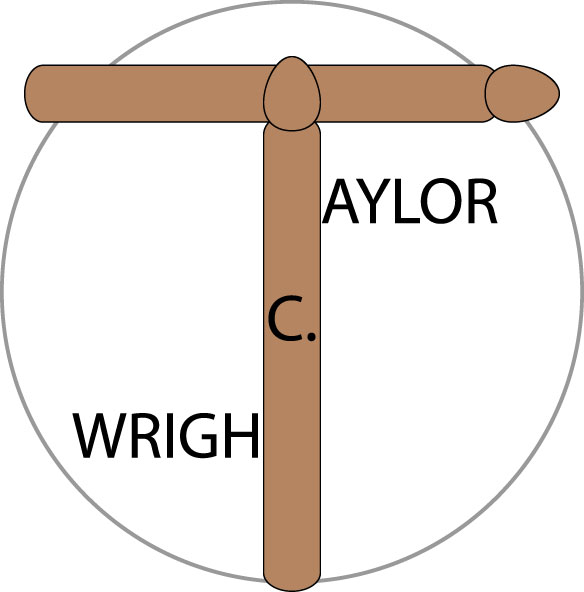
For this project, I decided to make a logo for a band/artist (myself being the artist in question). I chose this because my course topic revolves around the idea of creating an extended play album and all the parts involved to take it to press. This design would be the logo that you could exchange for just stating the artist name in the design.


Design Process:

In this design, I was mainly concerned with balance. The central part of the design is the large letter in the middle and everything expands out from that part of the design, so balance was key. As for research, I looked at drum heads and drum sticks to inform the design of the aforementioned elements. Often, drummers will use their logo as a drum head for their bass drum, since I decided to use sticks, I decided to show them resting on the rim of a drum. The significance of the design is that I started in music as a drummer and it is the instrument I am most proud of being able to play.


The design process started with me sketching out a few renditions of the design. I knew I wanted to use a drum sticks and my name, so I started with the drum sticks. I sketched them out to make the “T” and from there decided to balance out the image by putting the rest of the letters of my name on either side of the letters under the umbrella of the “T.” I originally had planned on putting my middle initial as a large letter behind the drum sticks in the center of the two pairs of letter to get rid of empty space but the balance was much better once adding it on top of the drum stick. I then decided to create a drum head for the sticks to be resting on to round out the logo.


Technical Design:

The elements I used in my design were two drum sticks, a drum head, and text. I modeled the drum sticks from drum sticks that I had next to my desk and played with the design by placing them on top of my snare drum in different ways to see how the design looked before doing the sketch. The process I used went as follows:

  1. Create the drum stick starting with the rectangle tool.
  2. Use the scissors to remove the bottom line of the rectangle.
  3. Use the ellipse tool to create the bottom of the stick.
  4. Use the scissors to remove the top part of the ellipse to complete the bottom of the stick.
  5. Use the direct selection tool to round the top of the rectangle.
  6. Use the ellipse tool to create an ellipse for the drum stick head.
  7. Use the direct selection tool to manipulate the ellipse into an egg shape.
  8. Place the drum stick head on the top of the drum stick.
  9. Group the objects and duplicate.
  10. Rotate and center the duplicated object.
  11. Create the text and enter the entire image.
  12. Use the ellipse tool to create a large circle for the rim of the drum.
  13. Adjust the stroke to add weight to the rim.
  14. Move the drum head to the back.
  15. Expand all items in the image.


The design went swimmingly, I did not run into any noteworthy issues in the design process.


Sources and Materials:

All images have been created by me and all tools and fonts used come standard in Adobe Illustrator.